

Stagnation
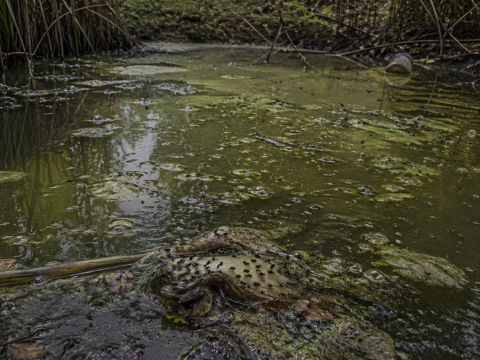 Stagnant water is ugly, smelly, putrid, clouded, lifeless. There is no activity except the insects that buzz around the surface. It's nasty, and it's hard to see beauty in a stagnant body of water.
Sometimes on the journey with an addict, we are in a time of stagnation. Nothing is happening. They are still in our lives, whether or not in the home. We may have given up on changing them, at least for a time. Maybe we have realized that changing them is impossible; we don't have that power. We may feel as though life has been sucked out of us. We can be at a place where we are just numb, without any positive feelings toward the addict. It's hard to see the beauty in the addict, or even the potential for beauty. This is what's happening in a time of stagnation. And it stinks, just like stagnant water.
So what's going on? The addict is using. We know it. They know we know. They aren't trying to stop, and we aren't trying to make them stop. We have been hurt by their words and actions. And we're still suffering those wounds. That's where the numbness comes in. We don't want to feel any more.
Chances are they, too, are hurting. Addicts carry a lot of shame, self-loathing, and regret. Their brains have been rewired by the addiction, whether it's drugs, alcohol, gambling, or pornography. They often suffer from some form of mental illness, which complicates the situation.
Knowing all of this, the natural thing for me to do is to find a way to fix things, but I can't. And I'm worn down. And I don't want to try any more. Maybe God allows us to get to this point because we need to learn that we have no control. We must surrender their addiction to God.
But that doesn't mean there is nothing to do in this season. It's not just the addict that is stagnating; often we are as well. Romans 5:3-5 tells us that suffering can benefit us. Stagnation can be a fruitful time, and here are three ways to make that happen.
First, we practice self-care. It's likely that up to this point, we've been taking care of everyone else, but our needs have been put aside. An addict isn't very good at managing their responsibilities, and we pick up the slack. We cannot do that forever, and we are not supposed to. Now is a time to pay attention to our needs.
-
Our physical needs. Am I getting enough sleep? Do I have a healthy diet? Do I need to see my doctor? Do I get some exercise each day? How is my body feeling? Am I taking good care of it?
-
Our emotional and mental needs. Am I feeding my mind with uplifting information or doom scrolling the internet or getting lost in books and movies? Are my feelings being validated by someone, or do I think they aren't important? Am I actively seeking healing for the wounds of addiction and the deeper wounds that were there before addiction became part of my life? Where am I in the healing process? Is there a community that can help me gain a right perspective on my situation?
-
Our spiritual needs. Do I take time every day to nurture my relationship with God? How well do I pray without ceasing? Am I seeking wisdom from my pastor or a spiritual director? Is prayer and fasting a regular part of my life? Do I have people praying for ME?
Self-care includes all three areas. We might feel we don't deserve self-care, or if we were more faith-filled we wouldn't need this, or we're selfish if we take time for ourselves. Those are lies of the devil, often spoken by the people in our lives who want things to stay the same. We must reject those lies.
The second way to make a time of stagnation fruitful is to learn about addiction (and mental health if that's an issue in your situation). Addiction is a disease. It affects the way the brain processes information. If I don't have a good understanding of it, I might get on the blame train. It's my fault because I did or did not do this. It's their fault because they didn't listen. They should be able to fix this, but they don't care. Addicts do things to feed the addiction that eat away at their human dignity, and quickly they come to hate themselves, even though they seem to direct their hate at you and others. The more we understand about their addiction, the easier it is to have compassion for their brokenness. Not to excuse the addiction, but to love them in it.
There are some great resources to learn about both addiction and mental illness. For addiction, try Alcoholics Anonymous, Al-Anon, Catholics in Recovery, or Celebrate Recovery. For mental illness, the series, The Sanctuary Course, and The Sanctuary Course for Catholics, is very helpful. Both are available for free online.
And the third thing, which is actually the hardest, at least for me, is to do acts of love. To love the addict in concrete ways. It's hard because I don't feel very loving. But Jesus didn't tell us to feel love, only to act with love. Love our enemies. Love those who persecute us. Love those who are not lovable. Love is the virtue we need in this place of addiction.
It's hard to love them. And we have good reasons not to show acts of love. Here are some reasons that might be familiar to you: They don't deserve it. They have hurt us terribly. If I do show any love, it will be a sign of weakness, and they will take advantage of it. That causes more problems that I don't want to deal with. They will tell me I'm a hypocrite if I show love, and then say no to whatever they want me to do. I'm tired of being called names. Those are all good reasons. All valid reasons. At least in this world, and with other people we know. But not in the eyes of God.
We have to pray for the grace to act with love. Love does not mean enabling their addiction or minimizing it or pretending it's not a problem, pretending it hasn't been a source of pain. We live in truth, not in lies. That's the virtue of honesty. So pray. Ask God to show you what acts of love He wants from you.
Here are acts of love that you might be able to do, even with all the baggage of addiction.
-
Make a favorite food. My addict likes banana bread and fruit salsa. I can make a batch and give her some.
-
Send some flowers or a plant. Write a short note to go with them.
-
Send a text message. Something like, "I love you and pray that you have a good day."
-
Encourage them if they tell you about plans to improve their life. It's easier to tell them why it won't work, but hold your tongue and find something positive you can say about the idea.
-
Give them a hug. My addict stopped by one day and was excited about a plan she had. She asked me for a hug, which surprised me. And I gave her one. She needed it. Chances are she had not had positive physical touch in a long time.
-
Remind them that God loves them, especially when they are feeling shame and self-hatred. God has a plan for them. He wants to heal them. They matter.
Those are all visible acts of love for the addict. When you do these acts of love, don't tie them to the addiction. God loves you even though you have ruined your life. I love you even though you have been so hateful to me. Here's some homemade bread, even though you don't deserve it. Avoid the urge to say, Yes-but. We want to be like the father of the Prodigal Son, who didn't temper his love when the son returned.
There are also silent acts of love, when we pray and fast for their freedom from addiction and for their salvation. We also need to do acts of love for others affected by the addiction—children, our spouse, parents, siblings. Have they been neglected because of the attention given to the addict? Everyone is hurting. Maybe together you can love each other in ways that are healing.
Those are the three priorities during this time: self-care, learning about addiction, and making acts of love. You need all three. As you take better care of yourself, you can be more loving. As you learn about addiction, you can understand what's happening and where you have and don't have control. That knowledge can help you heal and help you love the addict in a healthy way.
Our saint for this time of stagnation is Maximilian Kolbe. He was a priest in Poland and was arrested and sent to Auschwitz during World War II. It was a hopeless place, a place of suffering and death. Yet he found a way to be a light to others. He volunteered to take the place of another man who was to be killed. He and 9 others were isolated and starved to death. He went 14 days without food or water and outlived the others who were condemned to die with him. As they slowly suffered, St. Maximilian prayed and sang with them. Finally, the Nazis had to kill him because he wasn't dying of starvation. His courage and faith amid suffering and death can inspire us when we feel like we can't take another day.
Stagnation doesn't have to be a dead time. It can be a time of perseverance and hope that draws you closer to God. Make it so. Shoo away those nasty flies and help God's beauty shine through the murky waters of stagnation.
Questions for prayer:
-
What is one action you can take for self-care this week?
-
Do you have any resistance to learning about addiction and mental health? Is there anything more you can learn that might be helpful?
-
What is one act of love you can do for the addict this week?