Community Matters
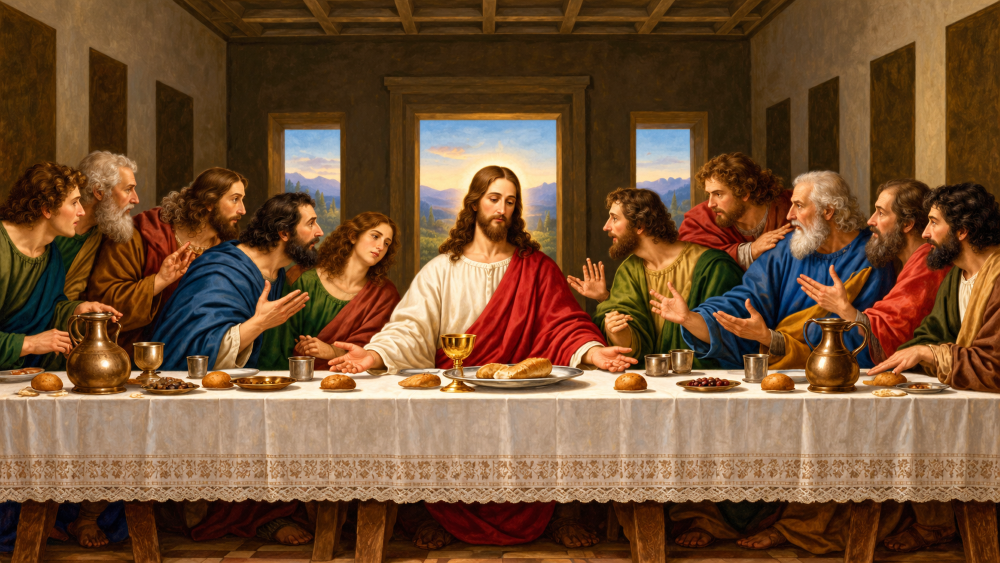 Yesterday was the monthly gathering of Sisters in Faith. I founded the group about 15 years ago to bring together women from different faith traditions to talk about how God is working in our lives and to love on each other and learn from each other. Ultimately, I hoped to break down the walls that separate believers, living the prayer of Jesus at the Last Supper that we may all be one.
Every month, I choose a different topic, and this month’s topic was community. I chose this topic about four months ago. Sometimes, I wonder if I have the right topic, and usually that isn’t clear until the day of the meeting. That’s what happened this month. I went to morning Mass before the meeting, and the homily by my pastor, Fr. Cong, was on community. He talked about what it is and what it is not, and he challenged us to become builders of community, in our families, our parishes, and beyond. That’s the Holy Spirit at work. Community was the theme I was given four months ago, and Father confirmed it that morning. Isn’t that cool!
Here are some thoughts from the talks I gave and a little extra from the homily I heard.
Sherry Turkle gave a definition of community in a book called Artificial Intimacy, which explores the inadequacies of online communities:
“True community is defined as requiring actual human presence, shared lived experiences, and the willingness to navigate conflict, rather than the frictionless affirmation provided by AI.”
Our post-COVID world has lost a sense of true community. We mistakenly believe that online is as good as in person, whether it’s a meeting, a church service, or a small group. But it is not.
Characteristics of a True Community
Physical presence. This means we are in the same place—together. Hebrews 10:24 says, And let us consider how to stir up one another to love and good works, not neglecting to meet together, as is the habit of some. The writer is cautioning us about neglecting to meet together. He’s telling us it is important to be physically present with others. If I’m on the phone with someone, I can be doing other things while talking to them. But when I am in the same room, that would be rude. I am more likely to be fully present when I am physically present. We don’t get all the social cues online that we get in person, and there is an expectation of small talk when we meet live. A personal touch comes with physical presence, and we need that.
Shared lived experiences. Doing life together. Acts 2:42 tells us that the early Christians devoted themselves to the apostles’ teaching and the fellowship, to the breaking of bread and the prayers. They knew what was happening in each other’s lives. They knew what prayers each person needed. They shared meals. They learned together. Are you part of a group like that? A group with a mission to serve, and within that mission, a desire to get to know each other and love each other. We need to share life with others to be in true community.
Healthy Conflict: This means dialogue without condemnation. Conflict is not bad. We should be able to talk about the things we disagree on. When we don’t, the conflict has not gone away; it’s only gone underground. That leads to resentment, anger, and division. As Christians, we should always choose love in the midst of conflict. I can love someone with whom I disagree. In a true community, that’s what happens. James 3:17-18 says: But the wisdom that comes from heaven is first of all pure; then peace-loving, considerate, submissive, full of mercy and good fruit, impartial and sincere. Another translation says, “open to reason.” In a true community, members are open to reason. We could be wrong, and we assume the best of the other person .
Safe Space: A safe group allows for authenticity and vulnerability. Authenticity means being who you are, not feeling like you need to put on a mask for others so that they will accept you. Vulnerability means you can share your troubles, your past, your wounds. You don’t have to be strong all the time. James 5 instructs us: Let your yes be yes and no be no. Say what you mean. If you are in a true, healthy community, you should be able to say yes and to say no.
God-Centered: The center of a Christian community must be God. You can have a great community that isn’t God-centered, but our focus is on living the Gospel in true community, so God must be at the center. We read in Ephesians 4:15-16: Speaking the truth in love, we are to grow up in every way into him who is the head. If we are God-centered, we are striving upward, trying to be more like Jesus.
True Communities in Action
If those are some traits or characteristics of true community, what does that look like in real life?
Family. The first community we know is our family. It would be great if all families were true communities, but they are often not. We may do life together, but we don’t have healthy conflict. Or we can’t be ourselves. Or they aren’t God-centered. So physical presence alone doesn’t give us true, healthy community. If that’s your current reality, don’t give up. Keep building the community at home.
Game Night. My sister, Mary, and her husband, Quintin, started a Friday Game Night many years ago. They wanted a safe place for unchurched people to meet and to experience God’s love. It’s for adults and kids. There is no alcohol allowed. They provide the main course, and people bring a dish to pass. And they play games. Card games, board games, pool, and any other game you think of. There were about 30 people who came to the first Game Night. Now, there are 50 to 75 people every Friday. They have grown together beautifully. Two couples met there and are now married. Many people began going to church because of the group. They keep coming and bringing their friends because it is a true community. All because of an idea Mary and Quintin had that they weren’t afraid to make happen.
Support Group. I started a Healing Support Group because I knew many people who struggled with anxiety and depression, and there wasn’t anything in the parish dealing with those issues. There was no place they felt safe to share freely. The group meets once a week. We share what’s happening, read and discuss a chapter of a book on healing, and we pray together.
Monthly Soup & Bread Days. The group meets one day a month to make soup and bread together to give to homebound people. While the bread is rising and the soup is cooking, there is a spiritual talk and discussion. This idea combines service to those in need with building of community.
Other Ideas. You can build a community with a Book Club. Choose a book (I have some you might like!) and discuss a chapter a week. Or start a Dinner & Movie Night group. Choose a faith-based movie. Meet at someone’s house and bring food. Watch the movie, and then eat and discuss it. My father started a men’s breakfast group many years ago. He has been gone for a few years now, but the group continues to meet. That’s because the community wasn’t based on the strength of one person. It became a community because these men shared their lives together over a meal.
Are you convinced that true community is good? Are you hungry for it? What can you do? How do you find one, and how can you become a builder of community?
Finding a Community
This is actually easy. Look for a group and check it out. See what’s available in your church. You can also accept an invitation to join a group or respond to an announcement at church. If there isn’t anything, then start your own. I promise you it’s not that hard. It doesn’t have to be perfect. You just decide what you want the group to be about and then invite people to join. Don't worry about what it could become. Just do the first step.
You might run into some obstacles in finding a community. These could be spiritual attacks, so it’s worth discerning. Are you an introvert? Do you prefer not to deal with other people? John wrote, We are to love one another. He didn’t say it would be easy, but loving the annoying people makes us saints. Maybe your experience is that you are already in a group, but it doesn’t feel like a community. You just get together, do the work, and go home. You have two choices. Either make the group better or find a different one. This is another opportunity for discernment. What does God want you to do?
Building Community
In Fr. Cong’s homily, he said that we can either build community or just be another person in the crowd. As Christians, we are called to be builders of community. Here are some ways to do that.
Be there. You can’t be part of a community if you don’t show up. Go even when you don’t feel like it. I don’t mean to go when you’re sick or when there is a blizzard or hurricane. That would be bad. But if you are feeling down or unmotivated, go anyway. If you didn’t get something done that you were supposed to do for the group, go anyway. If you are feeling needy, bless them by letting them fill your need. Show up.
Give and receive. Philippians 2:4 says, Look to not only your interests. When we’re part of a group, it’s not a 50/50 deal. Sometimes, we have to give more than we get, and other times, we are supposed to receive from others. Over time, there should be a balance between the two—we give some, and we receive some. Don’t be afraid to receive. It doesn’t mean that you are weak. Allowing others to help you takes strength. My dad struggled with that, but in his last couple of years, it was easier to ask for help. If he needed a ride, for example. I explained that there were so many people wanting to take him places, that was a gift to them. He wasn’t a burden. Being part of a community means allowing others to help you. We build community by giving and receiving.
Expect imperfection. Forgive. Ask for forgiveness. We are told to Bear with one another (Col. 3:13). You probably won’t find a group that is perfect. That’s because all of us are imperfect. Some people are more wounded than others. Some people speak without thinking. Some people don’t know when to stop talking. Some people have a hard edge even though they aren’t hard inside. Sometimes, people say and do dumb things. We have to forgive them. That’s what God calls us to do. And sometimes, we are the person saying or doing a dumb thing. That’s when we have to ask for forgiveness. No long explanations about what we meant or why we did it. Just a pure apology for the offense that it caused, and a request for forgiveness. People in healthy communities forgive others and ask for forgiveness when they mess up.
Maintain confidences. Paul warns in 2 Thess about people walking in idleness and being busybodies. In a healthy community, we don’t talk about others outside of the group. We don’t share someone else’s secrets, someone else’s story. Each person needs to feel safe in the group.
Strengthen and encourage others. We are called to lift others up when they are hurting and when their faith is weak. Ecclesiastes tells us that Two are better than one because if they fall, one will lift up the other. We don’t tear people down when they are struggling. We remind them of who they are and what God calls them to be.
Give fraternal correction. I heard a podcast the other day where a woman was sharing how she and her husband have given permission for their kids to call them out when they are not living the Gospel. Parents can call out the kids, and kids can call out the parents and each other. Then she said that they are really calling them up, not out. Calling them up to a higher way of living, more true to the Gospel they proclaim. When we give fraternal correction, we are calling people up. Up to God. Up to be the person God created them to be. And we do it with love, not condemnation.
Pray with and for each other. If you are part of a Christian community, you should pray with and for each other. Every meeting or gathering should begin and end with prayer. If someone is struggling, you might even stop the meeting, get off the agenda, and pray with them right then and there. And between meetings, you pray for each other. This is your family. They need your prayers. 1 Timothy 2:1 urges us that petitions, prayers, intercession and thanksgiving be made for all people. That’s what a true, healthy community does.
Here are the final words from Fr. Cong: Pray for the grace to be builders of community.
Questions for Prayer:
· Where have you felt belonging and why?
· How might the right community help you grow spiritually?
· What specific things can you do to be a builder of community?